×

The Standard e-Paper
Kenya's Bold Newspaper





Audio By Vocalize
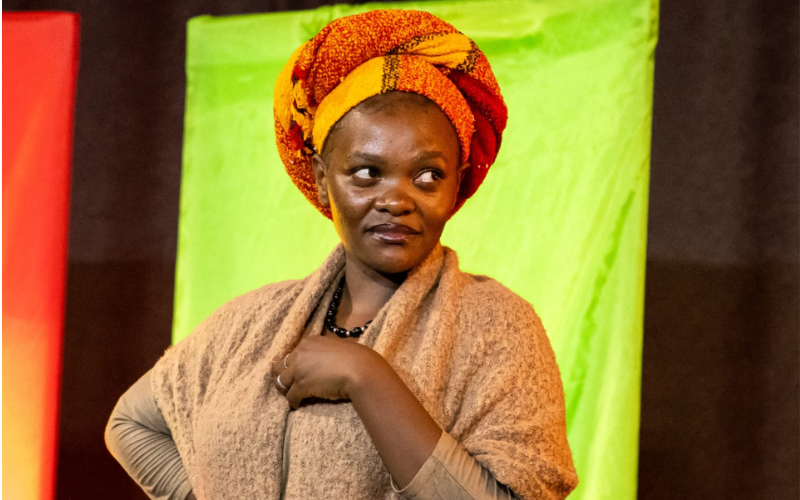
A monologue titled Yes, I Cheated on You, by producer and playwright Cosmas Bii and directed by Octavious Onyango of 64 Theatre, will go on stage on October 10 in various cities.
The play explores themes of motherhood, infidelity, partner insecurity and the consequences of mistrust in relationships. It examines what makes relationships toxic, leading to tragic occurrences such as intimate partner killings and suicide.
The one-woman play stars Joyce Wanjiku Kariuki at the Luxembourg show, Brenda Ibarah at the Kampala show, and Analicata Wangeci at the Mombasa show.
The play will also be staged in Nairobi, Mombasa, Nakuru, Eldoret, Kilifi, Kampala, Kisumu, Dar es Salaam, Brașov in Romania, Paris and Tübingen, with hopes of staging it in North Carolina and Ottawa.
The story centres on a woman with two children whose husband travels to Haiti to provide for the family. His absence turns into constant surveillance because he believes she is cheating on him.
Wangeci, who plays Terry, says the play aims to promote awareness and reconciliation.

Her research involved gathering personal experiences from the women in her life and watching solo plays online.
"As ladies, some of us don't know how to express ourselves, and you think silence is the answer. I am trying to give voice to the ladies," says Wangeci.
The project has gained interest from scholars and researchers at Kenyatta University, KIMC, Kisii University, Tumaini University in Tanzania, Kabale University in Uganda and the University of Tübingen in Germany.
Dr Felistas Richard Mahonge, Dean of the School of Education and Human Development at Dar es Salaam Tumaini University, will represent the scholars researching the project.
Playwright and producer Cosmas Bii says he intends to push the limits of what is possible in theatre by premiering the play globally. He describes it as an experimental project from an unknown production house, but hopes it will attract funding.
Bii hopes to run the project for the next five years to maximise the lessons learned while achieving the objective of pioneering a theatrical production model, expanding opportunities for theatre stakeholders in the country and amplifying the play's message.

He says the idea was inspired by the growing prevalence of toxic relationships fuelled by insecurity, control and mistrust.
"Partner insecurity has not been explored enough through theatre. When I was writing the play, the country was experiencing many cases of intimate partner killings," he says.
The play depicts how partner insecurity can become toxic, escalating into violence or even suicide after a relationship ends. He wanted to explore the roots of that insecurity and the damage caused by constant surveillance.
He also sought to approach the sensitive themes with care, drawing from real-life experiences while avoiding simplistic portrayals of gender conflict.
"Some elements of the story are inspired by lived experiences of people around me. I was careful not to betray anyone's trust or centre the play on a discussion about adultery," he says.
Bii says he researched the themes extensively, and many readers told him they could not tell whether the script had been written by a man or a woman because it captured the emotional realities so authentically. Their responses demonstrated how differently audiences interpret the story.

He explains that even before production, the script had already sparked conversations about trust, gender and relationships.
"Every woman who has read the script told me that the character didn't cheat, while most of the men concluded that she obviously did," he says.
He chose not to focus on whether the woman is guilty, but hopes audiences will leave reflecting on the weight of motherhood and domestic responsibility.
"I wanted people to appreciate the heavy responsibility of motherhood. By the end of the play, the question of whether she cheated becomes secondary to the immense emotional and physical labour she carries," he says.
Yes, I Cheated on You is also serving as an ambitious experiment in theatre production.
"We are experimenting with a new theatre exhibition model. The idea is to produce the same play on the same day in multiple cities around the world. To our knowledge, this has never been done before," he says.
The project has gained interest from theatre practitioners and academics across several countries, with researchers joining to document and study the model.

Among those involved are scholars from the Kenya Institute of Mass Communication, Tumaini University in Tanzania, Kabale University in Uganda and the University of Tübingen in Germany.
"This is about internationalising African theatre. It is not the first Kenyan play to travel internationally, but it is among the first to place this kind of global collaboration and academic research at the centre of the production," he says.
He hopes the partnership between theatre and academia will help elevate African performance beyond national borders. He believes the model could transform both theatre and education by strengthening collaborations between universities and the creative industries.
He sees the play as an opportunity to make universities important partners in promoting artistic work. He believes research can help take African theatre beyond its borders and inspire artists to dream bigger.
"If this succeeds academically, it could influence how theatre is taught in universities and how students engage with the industry. I want theatre to become one of Kenya's strongest cultural exports," he says.
The simultaneous productions are intended to achieve two goals: amplifying the play's social message and expanding theatre audiences beyond Nairobi.

"Our society has not fully embraced stage plays, especially outside Nairobi. We want to draw more people into theatres while ensuring this message reaches as many audiences as possible," he says.
Coordinating productions across multiple countries has, however, presented significant challenges.
The first question he tackled was whether audiences in Europe would relate to the story. Then came the challenge of coordination itself, finding committed collaborators, maintaining a shared artistic vision and convincing scholars that the project is worth studying.
Directors in each country are encouraged to adapt certain cultural elements while remaining faithful to the story.
"In Tanzania, for example, there may be cultural references that are different from Kenya. We meet every week to ensure everyone shares the same artistic vision while allowing room for local interpretation," he says.
The October 10 premiere date was chosen because it aligned well with production schedules across participating cities while avoiding the busy Christmas theatre season in the West.
Recruitment has largely taken place through international auditions and open calls for actors, directors and scholars, with additional casting currently underway in the United States and Canada.
Working across cultures has also taught Bii valuable lessons as a producer.
"I've realised that different artists prioritise different things. Some are driven by the creative process, while others focus on the terms of engagement. Managing such a large international project has been a huge learning experience," he says.

As the production expands, Bii is seeking legal partnerships to safeguard artists' rights and formalise collaborations through contracts.
Over the next five years, he hopes the project will grow into a long-term international network that enables performers from Kenya to work abroad and international artists to perform in Africa.
"I hope this project changes how people think about relationships by addressing insecurity and mistrust," he says. "I also hope it creates more opportunities for scholars and theatre practitioners and inspires a new generation of artists."
Bii envisions using the same international production model for larger ensemble productions, creating permanent production units in participating countries and opening new ways for stories to reach global audiences.
"My hope is that audiences everywhere leave with one message. Our relationships become more humane when we overcome insecurity and choose trust instead of suspicion," he says.
64 Theatre has been producing plays that have been staged in Eldoret. Some of its productions have also toured Iten, Kapsabet and Nairobi, including performances at the Kenya National Theatre.
Subscribe to our newsletter and stay updated on the latest developments and special offers!